

Coppicing - what we do in the woods in the winter
November to March, it’s cold, wet and the ground is muddy, or frozen, but winter is the time for coppicing.
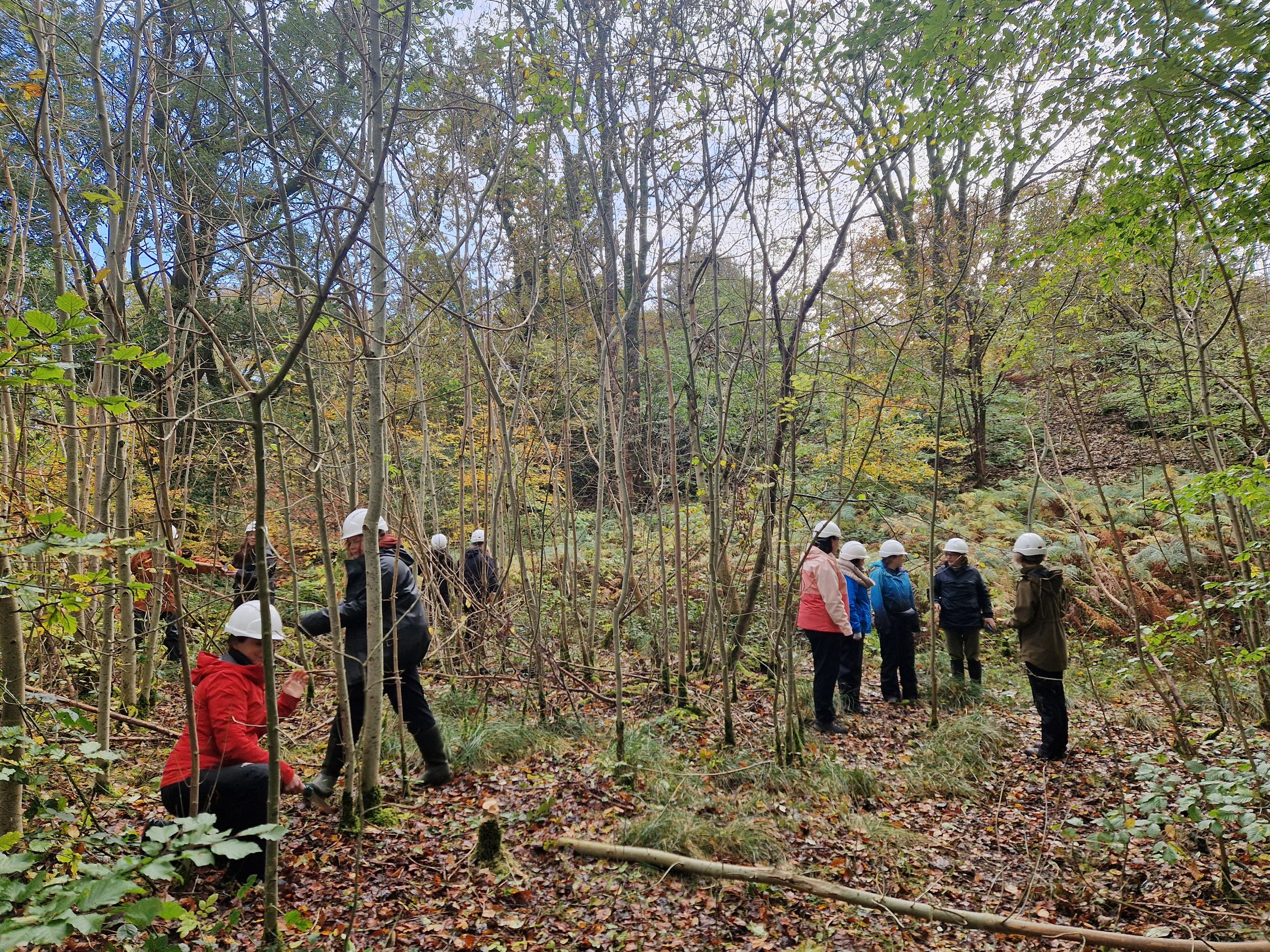
Here we are choosing which trees to coppice as part of the Forest and Outdoor Learning Award training which I deliver with my collegues at FSTC in Cathkin Braes every year.
What is Coppicing?
Coppicing is an ancient, sustainable way of managing woodlands that involves cutting living trees back to the base to create ‘stools’. When protected from grazing, these stools will create new shoots that grow into manageable long straight poles of different sizes for use as building materials for paths, houses, shelter, plus a host of other uses such as charcoal, basketry, fence and hurdle materials, furniture, magic wands… the possibilities are endless.
There is archaeological evidence in the UK that suggests we were coppicing in the stone age - almost six thousand years ago - at Sweet Track. Coppicing is still practiced today and as forest school leaders we learn about it in our training to help us understand how woodland ecosystems work, and become effective stewards of the locations that we work. In our practice, we know coppicing increases wildlife and biodiversity by letting light into the ground and shrub layers, encouraging flowers, food for insects and creating habitat for all parts of woodland ecosystems, and this allows us to create more effective learning environments.

The stool and the protection.
Here you can see the cut stump, or stool, and the protective fence or nest we have woven around it to prevent deer grazing.
I work with GCC, the Friends of Pollok group to do coppicing during the winter months November to March, in locations that we run our forest schools.
I love coppicing because it encourages new growth of what are usually old, diseased or dying trees, essentially making them more healthy than they were before you cut them. And I love the resources you can get for making things.
Doing coppicing where we run forest school sessions gives me a sense of long term purpose because I see the new growth getting stronger and taller over the years, knowing that wood might eventually turn into an awesome carved mushroom or an essential den pole at forest school one day. For me, coppicing is the start point of creativity when working with the natural world.
“For me, coppicing is the starting point of creativity when working with the natural world.”

Coppicing with the Friends of Pollok.
Here we are in March 2025 sorting the cut poles from the four hazel trees we coppiced.
Coppicing is a small, slow, hand crafted process where we improve tree health and productivity by cutting it back down to the base.
Pollok Country Park
In March 2025 we began to coppice a tiny patch of the hazel at the forest school site as part of our ‘reasonable management’ terms of our forest school contract for using the land. When I say tiny, I mean tiny - we only cut four trees. Coppicing is generally not a big operation, there are no machines involved, we only use hand tools but it can feel like you’ve done a lot of work even in a short two hour period.
There are lots of deer in Pollok Country Park, so it was essential that we build some kind of grazing protection around the stools, and you can see all the photos from that session in last year’s blog. We went back this year to have a look at the progress of the growth, and to rebuild a bit of one fence that had fallen down. The sun came out for us, it was a very satisfying couple of hours working in the woods together.
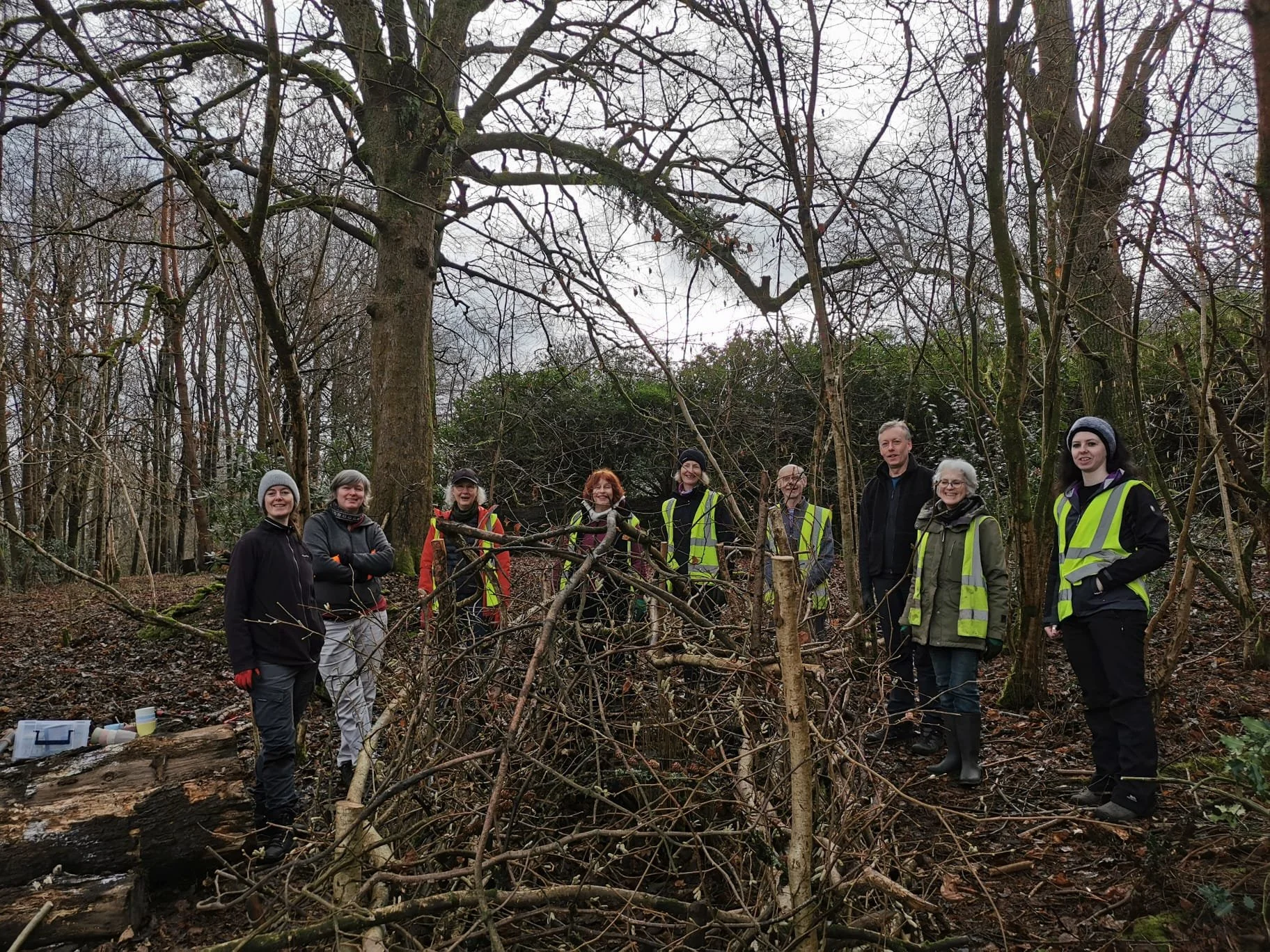
Me and the hardy group of woodland workers from the Friends of Pollok Park doing coppicing in February 2026.
Carmunnock
My colleagues at W.I.L.D. have the contract to manage coppicing at Carmunnock Willow Coppice.
It is a beautiful place; last time I visited to picking up poles for the archways of the Carmunnock Primary School willow classroom, I startled a woodcock out of the undergrowth, saw a buzzard and a heron in an aerial fight over food (a frog?) and the flashing tails of two big roe deer nipping off through the trees.
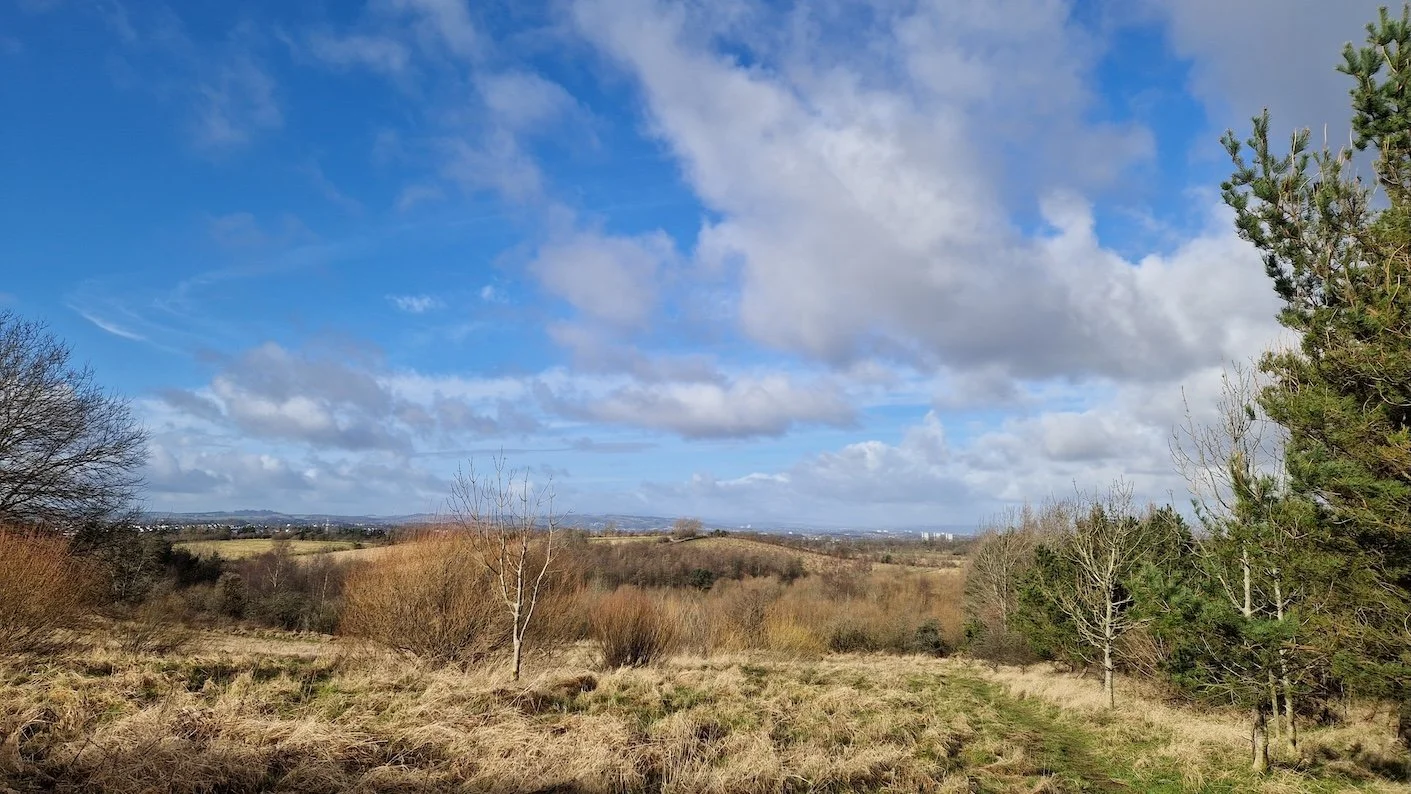
Looking south over Carmunnock Willow Coppice.
